
 See My Latest Article on HelloNation
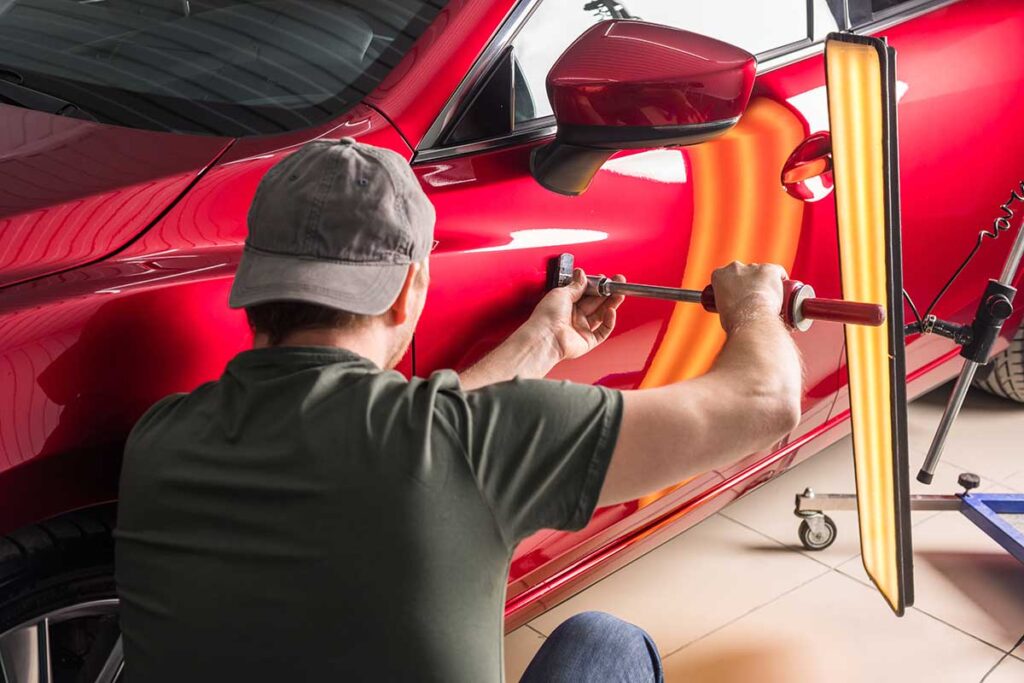
Paintless Dent Repair, often called PDR, is a specialized method for removing certain dents without sanding, filling, or repainting the damaged panel. It can be an effective repair for many shallow dents, but it is not a universal solution for every type of collision damage.
Residents of Ocala, FL often encounter dents from parking-lot contact, shopping carts, falling branches, minor door impacts, and seasonal hail. Understanding what PDR can and cannot do makes it easier to evaluate repair information and avoid unrealistic expectations.
Myth: Paintless Dent Repair works on every dent
PDR does not work on every dent. It is most suitable when the original paint remains intact and the metal or aluminum panel has not been stretched too severely.
A repair may be a good candidate when the damage is:
- Shallow or moderately deep
- Located on a broad, accessible section of a panel
- Free from sharp creases or torn metal
- Not directly over complicated reinforcement
- Covered by paint that is still attached and stable
Large dents, severe folds, punctures, and areas with missing paint may require conventional body repair or panel replacement instead. The final decision depends on the dent’s depth, location, material, and effect on the panel’s structure.
Myth: PDR is only for tiny door dings
Paintless Dent Repair can address more than small parking-lot marks. Technicians may repair larger shallow dents, hail damage, and broad body-panel depressions when the metal has not been excessively stretched.
Size alone does not determine whether a repair is possible. A wide, shallow dent may be easier to correct than a small but sharply creased dent. A dent near the edge of a panel, body line, or structural brace can also be more difficult than a larger dent in an open area.
The appearance of the damage under changing light can provide useful clues. A dent that looks minor in shade may reveal a sharp crown or multiple stretched areas in direct sunlight.
Myth: PDR means the panel is simply pushed back into place
PDR is a controlled metal-shaping process, not a single forceful push. The damaged area is gradually worked from the underside or manipulated from the exterior with specialized tools.
A technician typically studies the reflection across the panel to identify the deepest part of the dent and the surrounding pressure points. The metal is then adjusted in small stages. Excessive force can create high spots, distort the reflection, or damage the paint.
Access may come through existing openings, behind interior trim, beneath a hood or trunk lining, or through other carefully protected routes. In some situations, limited trim removal is needed to reach the back of the panel.
Myth: PDR always leaves the vehicle looking brand new
A well-suited repair can produce a highly clean result, but perfection is not guaranteed in every case. The condition of the paint, the age of the vehicle, the shape of the dent, and previous repairs all affect the outcome.
Dents with a smooth contour and intact factory paint often respond well. More difficult damage may leave a slight variation visible from certain angles or under intense lighting. This is especially possible with deep creases, stretched metal, or dents that cross strong body lines.
A realistic assessment should consider whether the goal is complete visual correction, substantial improvement, or preservation of the original paint. Original paint can have value because it avoids color-matching differences and additional refinishing.
Myth: PDR damages the paint because tools are placed behind the panel
PDR is designed to preserve the existing finish, but careless technique or poor access can create problems. The process requires controlled pressure, suitable tools, and protection around trim, wiring, glass, and painted surfaces.
Factory paint is generally more flexible and durable than many older refinished surfaces. A panel that has already been repainted may have weaker adhesion or a different level of flexibility. That does not automatically rule out PDR, but it can increase the risk of paint lifting or cracking.
Temperature also matters. In Ocala’s warm, humid conditions, vehicle panels can become hot in direct sun, while interior materials and adhesives may respond differently than they do in cooler weather. Excessive heat or improper tool placement is not a substitute for careful technique.
Myth: PDR is always cheaper than conventional repair
PDR is often less expensive for suitable damage, but it is not automatically the lowest-cost option in every situation. The total difficulty depends on access, the number of dents, the panel material, and the time required.
Conventional repair may involve body filler, sanding, primer, paint, blending, curing, and reassembly. PDR can avoid many of those steps when the original panel and paint are still usable. However, a difficult dent requiring extensive precision work may take substantial time.
Price comparisons can also be misleading if they do not include related repairs. A damaged molding, broken trim clip, cracked lamp, or misaligned panel may need separate attention regardless of the dent-removal method.
Myth: PDR is only useful for newer vehicles
Vehicle age does not automatically determine whether PDR is appropriate. Older vehicles can qualify if the paint is stable, the metal is workable, and the damage is within the method’s limits.
The main concern with an older vehicle is often the condition of the finish. Sun exposure, previous paintwork, oxidation, and repeated repairs may make the surface less predictable. A newer vehicle may also have difficult-to-reach panels, aluminum components, advanced sensors, or reinforced body structures.
The material matters as well. Steel and aluminum behave differently, and some modern panels require different techniques and access methods.
Myth: A magnet can reveal whether PDR will work
A magnet provides very limited information and cannot determine repairability. It may suggest whether a panel contains steel, but it does not reveal the depth of the dent, the condition of the paint, or the accessibility behind the panel.
Many vehicle panels include aluminum, plastic, high-strength steel, adhesives, sound-deadening materials, and layered construction. A magnet cannot identify hidden braces or tell whether the metal has been stretched.
A careful visual and physical assessment is more useful than a single household test.
Myth: Hail damage is always easy to repair with PDR
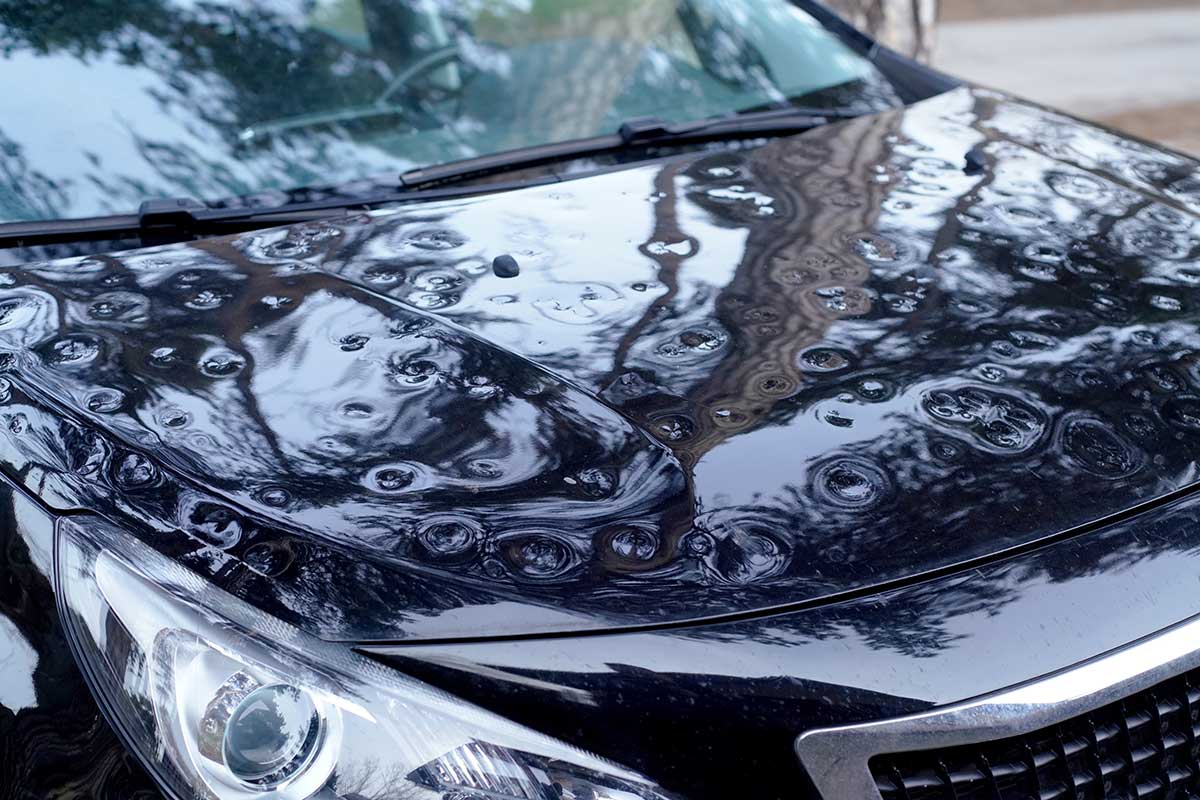
Hail damage is often suitable for PDR, but the pattern and severity matter. A vehicle with many shallow dents may be repairable, while larger impacts can affect panel edges, body lines, paint, glass, trim, or the roof structure.
After a severe storm, damage may be difficult to see until the vehicle is viewed under angled light. Water intrusion, cracked glass, loose trim, and damaged weather seals should not be overlooked. A roof dent can also be more complex if it affects reinforcement or interior components.
Seasonal storms and falling debris make this distinction particularly useful for local vehicle owners. Photographing the damage promptly can help document its extent before temporary repairs or washing alter what is visible.
Myth: DIY dent tools provide the same result
Basic suction cups, glue tabs, and pry tools may help with limited cosmetic damage, but they do not reproduce the control required for precise PDR. Incorrect pulling can create a raised spot, stretch the metal, crack the paint, or damage the panel from behind.
Glue-pulling methods also require the correct adhesive, temperature, tab selection, and release technique. Interior access may involve airbags, wiring, trim clips, or fragile insulation. Working near those components without proper knowledge can create additional safety concerns.
For a minor dent, learning what not to do is often more valuable than experimenting with aggressive tools. Avoid drilling holes, using excessive heat, striking the panel repeatedly, or placing force against unknown wiring or safety equipment.
How can someone judge whether a dent may qualify?
Look for several signs rather than relying on size alone:
- The paint is intact and not flaking.
- The dent has a rounded shape rather than a sharp fold.
- The panel edge and body lines are not severely distorted.
- There are no holes, tears, or exposed bare metal.
- The panel does not appear to have shifted from its normal position.
- Interior access does not involve an obvious safety component.
Even when these signs are present, repairability can only be judged reliably after examining the damage from multiple angles. The most useful question is not whether PDR is always better, but whether it is appropriate for that specific panel, paint finish, and type of damage.