
 See My Latest Article on HelloNation
Paintless Dent Repair (PDR) is a method of reshaping a vehicle’s metal or aluminum body panel without sanding, filling, or repainting it. Instead of covering the damage, the repair process carefully returns the panel to its original shape while preserving the factory finish.
For residents of Ocala, FL, PDR can be relevant after hail, falling branches, parking-lot impacts, door dings, or minor bumps involving the hood, roof, doors, fenders, or quarter panels. Whether it is appropriate depends on the dent’s size, depth, location, and effect on the paint.
How does Paintless Dent Repair work?
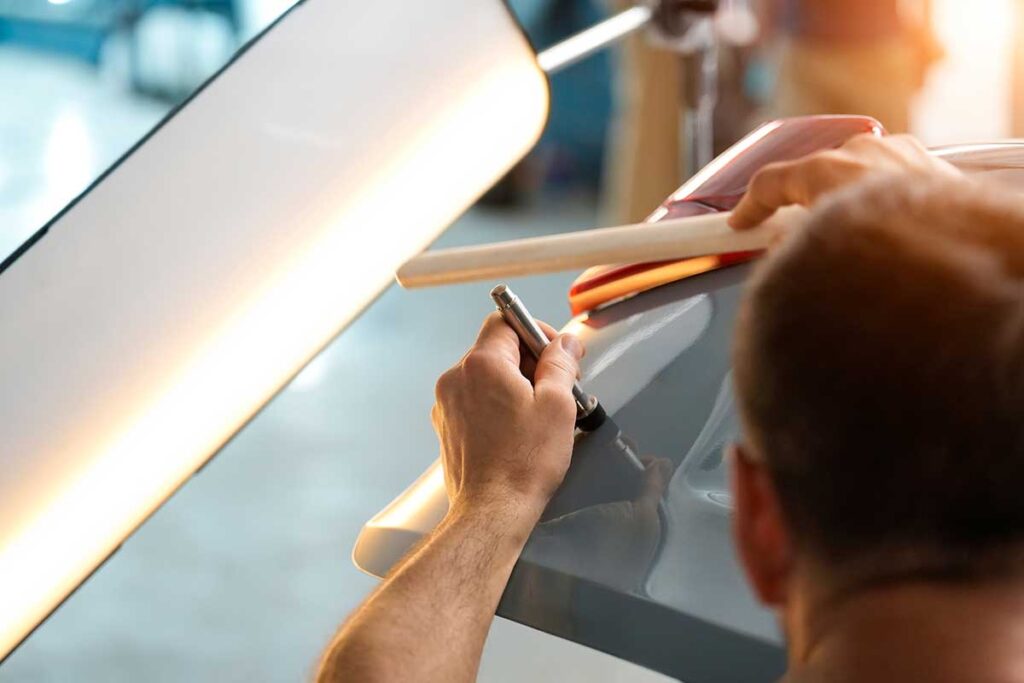
PDR works by reaching the back side of a damaged panel and gradually moving the metal back into position. The technician applies controlled pressure rather than pulling aggressively or heating the panel until it changes shape.
The process commonly involves:
- Inspecting the dent under specialized lighting
- Removing interior trim, liners, lights, or other parts if access is blocked
- Positioning a shaped metal rod or other tool behind the damage
- Applying small, controlled pushes to the deepest part of the dent
- Checking the panel from multiple angles as the surface becomes level
- Reinstalling any removed components and inspecting the finished area
The technician is not simply pushing until the dent “pops out.” A dent contains stretched and compressed areas in the metal. Repair requires understanding how those tensions are distributed and correcting them gradually.
Special lights help reveal subtle changes in the panel. A reflection line may bend or distort over the dent, allowing the technician to see where pressure is still needed.
What types of damage can PDR repair?
PDR is generally suited to dents where the original paint remains intact and the metal has not been excessively stretched. Common examples include:
- Round hail dents on a hood, roof, or trunk
- Small door dings
- Shallow dents from shopping carts or light impacts
- Minor creases without severe paint damage
- Dents on broad, accessible body panels
The size of a dent matters, but it is not the only factor. A larger, shallow dent may be repairable, while a smaller dent on a sharp body line may be more difficult.
The material also matters. Steel and aluminum respond differently to pressure. Aluminum panels can be repaired with PDR, but they generally require different techniques because aluminum has different stretching and memory characteristics.
Does Paintless Dent Repair damage the paint?
When performed correctly on suitable damage, PDR is designed to preserve the existing paint. No filler, primer, or color-matching process is needed because the repair works beneath the finish.
That does not mean every dent with paint damage can be restored through PDR. A sharp impact may crack or chip the paint even if the metal can be reshaped. PDR may improve the panel’s shape, but it cannot replace missing paint or repair corrosion.
A vehicle’s finish can also be more vulnerable if it has been repainted previously. Factory-applied paint is typically bonded and cured differently from some refinished surfaces. If the finish is weak, pressure from the back side may cause lifting or cracking.
What damage is usually not a good candidate?
Traditional body repair or panel replacement may be more appropriate when:
- The paint is broken, peeling, or deeply scratched
- The metal is torn or punctured
- The dent has sharp folds or severe creasing
- The panel is stretched beyond its ability to return to shape
- The damage reaches an edge, seam, brace, or structural area
- A body line has been heavily flattened
- The panel has already been repaired poorly
- The impact affected sensors, lights, hinges, or safety equipment
Some dents can be improved but not returned completely to their original condition. A realistic evaluation should account for the panel’s material, access, finish, and the visibility of the repair area.
Why is access behind the panel important?

PDR depends on reaching the damaged metal with enough control and visibility. Access may be available through the trunk, door cavity, engine compartment, or behind a removable interior panel.
In some cases, access is limited by:
- Bracing behind the panel
- Window mechanisms
- Wiring and electrical components
- Sound insulation
- Airbag equipment
- Reinforced sections of a door or roof
- Inner panels that are difficult to remove safely
Technicians may use glue-pulling methods when the back side cannot be reached directly. Small tabs are attached to the outside of the panel with removable adhesive, then pulled in a controlled way. This can be useful, but it still requires careful finishing because an overly strong pull may create a high spot or disturb the paint.
How long does the repair take?
Time varies considerably. A single shallow door ding may require relatively little work, while hail damage involving many panels can take much longer. The number of dents, their size, the vehicle’s construction, and the amount of disassembly all affect the process.
A panel with several small dents is not always faster to repair than one with a single larger dent. Each area must be examined and refined, and hail damage can involve the roof, hood, trunk, doors, and side panels at the same time.
In Ocala, seasonal thunderstorms can produce hail and falling-branch damage in isolated areas. A vehicle may be affected while another nearby is not, so a visual inspection in good lighting is more useful than assuming all vehicles in the same neighborhood experienced the same damage.
Is PDR the same as using suction cups or a dent puller?
No. Household suction cups and inexpensive dent pullers may move the surface temporarily, but they usually do not provide the precision needed to restore the metal evenly.
A dent can contain low areas beside raised edges. Pulling only the center may leave a visible ring, crease, or high spot. Aggressive pulling can also stretch the metal or damage the paint.
PDR is a controlled metal-shaping process. The objective is not merely to make the dent less noticeable from one angle, but to restore the panel’s contour across the entire affected area.
Can PDR prevent rust?
PDR does not remove rust that already exists, but preserving intact paint helps maintain the vehicle’s original protection. If a dent has exposed bare metal, moisture can eventually lead to corrosion.
This is especially worth watching in a warm, humid environment. Rainwater, road moisture, and debris can collect around damaged edges, seams, and chipped paint. Any exposed metal should be assessed promptly so the appropriate corrosion-control method is used.
A dent that appears cosmetic may also hide a cracked finish or damage behind the panel. Checking the area after storms, tree debris, or a parking-lot impact can help identify problems before they spread.
Does insurance cover Paintless Dent Repair?
Coverage depends on the vehicle owner’s policy, the cause of the damage, the deductible, and whether the incident is treated as comprehensive or collision damage. Hail is commonly handled differently from a collision with another vehicle or object, but policy terms control.
Before authorizing repairs, the owner should review the policy and understand whether filing a claim could affect premiums or claim history. Photographs taken soon after the incident can help document the date, location, and condition of the vehicle.
PDR is best understood as a repair method, not a guarantee that every dent can be removed without conventional bodywork. The most important questions are whether the paint is intact, whether the panel can be accessed safely, and whether the metal has been stretched or torn.